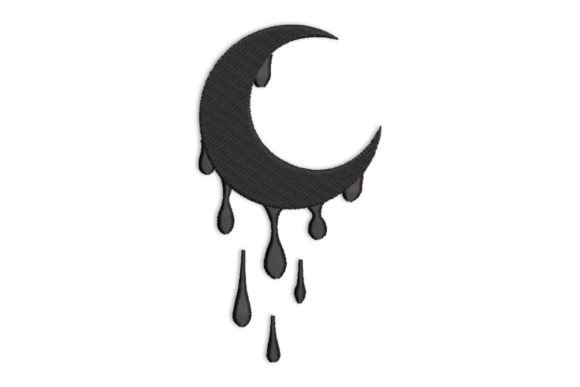
Moon Dripping Embroidery Design
A Thoughtful First Impression for Boutique Apparel Designers
As an embroidery designer who’s developed collections for small clothing brands and Etsy sellers over the past decade, I opened Moon Dripping expecting a soft, dreamy nursery motif—and what I found was more versatile than the category suggests. Visually, it’s a crescent moon with gentle, organic “drips” cascading downward—like liquid silver or melted wax. It reads as poetic, not literal; serene, not saccharine. The line work is clean but intentionally imperfect—slight tapering, subtle weight shifts—giving it handmade warmth without sacrificing machine precision. It feels premium yet approachable, feminine without being fussy, and quietly modern rather than trend-chasing. That balance makes Moon Dripping stand out in a sea of over-designed nursery motifs—and more importantly, translates effortlessly beyond the nursery.
Why Moon Dripping Works So Well on Sweatshirts & Hoodies
This design shines on neutral sweatshirts—cream, heather grey, oatmeal—where its gentle curves echo the relaxed drape of the fabric. On chest placement (standard 3–4" width), it reads clearly without overwhelming. For oversized hoodies, I’d anchor it slightly lower on the left chest to maintain proportion, or scale up 10–15%—the stitch density holds well when adjusted thoughtfully. Sleeve accents? Yes—especially on rolled cuffs of pastel hoodies, where the drip flows naturally with the arm’s angle. As a back design on cropped or boxy sweatshirts, it adds quiet sophistication without shouting. Just avoid placing it directly over thick seams or ribbed hems unless you’ve tested stabilizer support—those areas compress differently under hoop pressure.
Performance Across Fabric Types & Garment Categories
- T-shirts: Works beautifully on midweight cotton and tri-blends—but use lightweight cutaway stabilizer to prevent puckering, especially around the drips’ tapered ends.
- Denim jackets: The contrast between structured fabric and fluid design creates instant visual interest. Best placed on the upper back yoke or left chest—avoid curved pockets unless you re-hoop precisely.
- Tote bags & lifestyle merch: Excellent for boutique merchandise. Its vertical rhythm reads well on canvas, and the moderate stitch count keeps production time efficient for small-shop runs.
- Dark apparel: Choose matte thread colors (navy, charcoal, deep plum) instead of high-sheen metallics—the design’s mood relies on subtlety, not sparkle.
- Fleece & brushed fabrics: Requires medium-weight tear-away + light cutaway combo. The drips can nestle into nap if stabilizer isn’t firm enough.
Strategic Value for Small Creative Businesses
Moon Dripping isn’t just another embroidery file—it’s a quiet brand amplifier. For Etsy sellers and handmade product lines, it elevates perceived value: customers associate delicate, intentional motifs like this with care and curation. When styled consistently across sweatshirts, tote bags, and pillowcases (yes—even outside Nursery contexts), it builds visual recognition without needing logos. That consistency strengthens buyer trust: shoppers begin to recognize your aesthetic language before they even see your shop name. In lifestyle product photos and printable mockups, Moon Dripping adds texture and narrative—think cozy autumn mornings, slow-living branding, or minimalist babywear that appeals to design-conscious parents.
Where to Use It Carefully—And Why
While versatile, Moon Dripping demands thoughtful execution. Avoid tiny chest placements under 2.5"—the drips lose definition and risk looking muddy. On highly stretchy knits (like some French terry), test stitch density first—the longest drip segments may require reduced tension or added underlay. Curved surfaces (e.g., shoulder seams, rounded tote gussets) need precise hooping and possibly digitized adjustments—don’t assume the base file auto-compensates. And crucially: always confirm hoop size requirements. If the listing mentions multiple hoop sizes, choose the version matching your most-used frame to minimize re-hooping mid-production.
Practical Designer Notes Before You Stitch
- Test on scrap fabric—especially if using new thread colors or stabilizer combos. Watch how the drips lay on your target garment’s exact texture.
- Review thread color contrast carefully. Soft greys and muted mauves often read richer than stark white on light fabrics.
- Inspect stitch density in the file preview—if threads bunch near the drip tips, reduce top tension by 0.5–1.0 on your machine.
- Compare placement options digitally first: overlay mockups at 3", 4", and 4.5" widths to see which best serves your garment silhouette.
- Confirm licensing terms on Creative Fabrica before selling finished apparel—some embroidery files include commercial use, others don’t. When in doubt, contact the designer directly.
- Check product details: The listing notes it’s a machine embroidery design for nursery and apparel—but doesn’t specify file formats, stitch count, or exact hoop sizes. Always verify those before batch production.
Final Thoughts for the Intentional Embroiderer
Moon Dripping is the kind of Creative Fabrica embroidery file that rewards attention to detail—not flash. It won’t dominate a social media feed with loud graphics, but it will linger in memory for its quiet confidence. For small shop owners building a boutique brand around authenticity and tactile quality, it’s a smart, repeatable asset: one digital embroidery file that supports sweatshirt embroidery, hoodie design, tote customization, and seasonal lifestyle merch—all while reinforcing a cohesive, calm, and considered identity. Whether you’re launching your first Etsy collection or refining your second, Moon Dripping earns its place not as filler, but as foundation.