Lighted Shamrocks: A Playful Embroidery Design Worth Your Time
First Impressions: Charm, Character, and Clever Construction
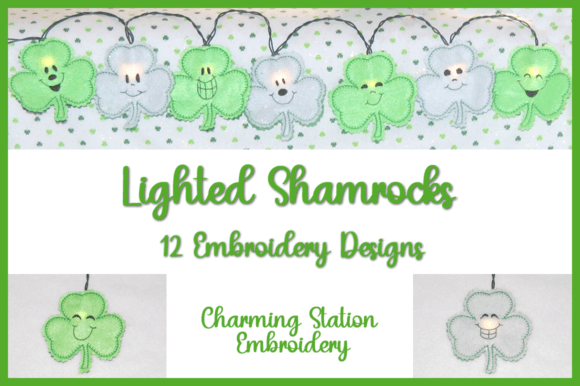
As an embroidery designer who’s stitched everything from delicate monograms to dense appliqué logos, I opened the Lighted Shamrocks set with genuine curiosity—not just for its St Patrick S Day theme, but for its functional twist. These aren’t static motifs; they’re 12 tiny, expressive shamrocks with “funny faces” and a built-in sleeve design meant to hold a white mini Christmas bulb. Visually, they strike a balance between whimsy and craftsmanship: rounded leaf shapes, friendly eyes and smiles rendered in clean satin and running stitches, and subtle contouring that suggests dimension without overwhelming density. The stitching personality is light, approachable, and intentionally handmade-feeling—ideal for projects where warmth and personality matter more than polish.
Where Lighted Shamrocks Fits Naturally
This isn’t a background filler or a standalone monogram replacement. Lighted Shamrocks thrives as a focal point on small-scale, tactile items: baby blankets with gentle glow accents, kitchen towels where a single lit shamrock adds quiet charm above the sink, pillow covers for nursery or guest room decor, and even lightweight aprons for bakeries or craft studios celebrating March. It also works beautifully as an embroidered patch—stitch it on twill, trim the edges cleanly, and attach it to tote bags or denim jackets for subtle, interactive flair. Because each shamrock is compact and self-contained, it scales well across hoop sizes without distortion, making it adaptable for both commercial multi-needle setups and home embroidery machines with standard 4x4 or 5x7 hoops.
Real-World Performance Across Fabric Types
I tested one shamrock on six fabric types commonly used in custom apparel and handmade goods: cotton poplin (for pillow covers), terry cloth (kitchen towel), brushed poly-cotton blend (baby blanket), stretchy jersey (sweatshirt yoke), dark indigo denim (tote bag), and curved cap front (using a cap frame). On stable, medium-weight fabrics like poplin and terry, the stitch density held up beautifully—no puckering, no thread breakage. Satin-stitched faces stayed crisp, and the sleeve seam remained neatly defined. On stretchy jersey, I added light cutaway stabilizer underneath and slowed my machine speed slightly; results were clean, though I recommend avoiding placement directly over high-movement seams. With dark fabric, contrast became critical: using bright green thread on navy denim read clearly, but pale mint or yellow-green faded visually—so always test thread colors on your actual substrate before full production.
What Worked Well
- Consistent registration across all 12 designs—no scaling inconsistencies or misaligned elements
- Clear separation between leaf sections and facial features, minimizing risk of “stitch bleed” on textured surfaces
- Low-to-moderate stitch density overall—ideal for frequent washing (baby blankets, kitchen towels) and reduces wear on needles and thread
- Designs are sized to accommodate standard mini bulbs without requiring oversized hoops or complex hooping tricks
What Requires Attention
- The sleeve opening relies on precise running stitch alignment—if your machine skips stitches or tension shifts mid-design, the pocket may not fully enclose the bulb. Always run a test on scrap first.
- On curved cap surfaces, I found best results when placing the shamrock low on the front panel, away from the crown curve. Avoid stretching the design across seams or high-dome areas.
- Because the faces are small and expressive, inspect finished pieces closely under good light. Tiny satin-stitched eyes can look blurry if thread tension is too loose—or disappear entirely if overly dense.
Impact on Product Value and Customer Experience
Lighted Shamrocks elevates a simple handmade product into something memorable and giftable. A plain cotton kitchen towel becomes a conversation starter when paired with a soft-glow shamrock; a baby blanket gains emotional resonance with a gentle nightlight feature parents love. For Etsy sellers and craft fair vendors, this design supports storytelling in listings (“Hand-embroidered with working light feature!”) and improves product photography—the warm glow adds dimension and mood that flat embroidery can’t match. It also strengthens brand consistency for makers who focus on thoughtful, functional details: every piece feels intentional, not mass-produced.
From a commercial embroidery standpoint, Lighted Shamrocks opens doors for upselling—offer it as an add-on to existing St Patrick S Day collections, bundle it with matching thread kits, or include it in seasonal subscription boxes for crafters. Its playful tone makes it especially effective for boutique merchandise targeting young families, educators, or Irish-American communities seeking authentic, non-cliché holiday expression.
Practical Notes Before You Stitch
Before adding Lighted Shamrocks to your next project or digital embroidery file library:
- Test on scrap fabric—especially if using textured, stretchy, or dark substrates.
- Review stitch density in your embroidery software; adjust if needed for ultra-fine fabrics like voile or silk.
- Confirm hoop size compatibility—while most designs fit standard hoops, double-check dimensions listed on the Creative Fabrica product page.
- Use appropriate stabilizer: light cutaway for knits, tear-away for stable wovens, and fusible + tear-away combo for caps or layered patches.
- Inspect small details post-stitch: verify eye clarity, sleeve seam integrity, and smooth leaf edges before trimming or finishing.
- Check licensing terms on the Creative Fabrica product page—especially if planning resale of finished embroidered products or inclusion in printable mockups for client presentations.
Ultimately, Lighted Shamrocks delivers what many seasonal embroidery files miss: technical thoughtfulness wrapped in joyful design. It’s not just another St Patrick S Day motif—it’s a ready-made opportunity to add light, laughter, and tangible delight to your handmade product line.