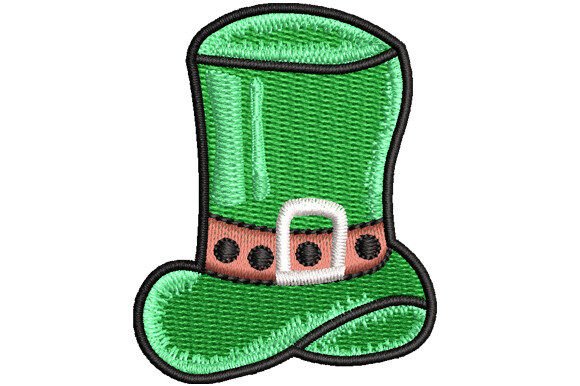
St. Patrick’s Day Hat
First Impression: Festive, Bold & Instantly Recognizable
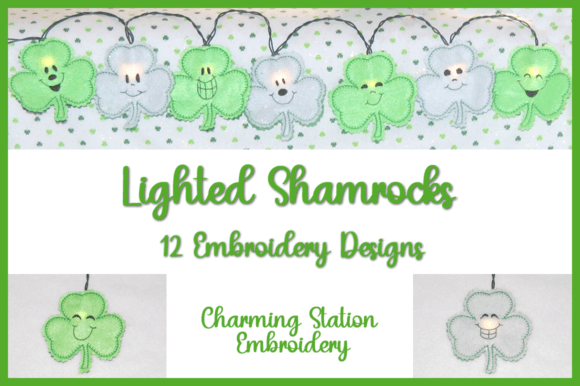
As an embroidery designer who’s prepped over 200 craft fair booths, my gut reaction to St. Patrick’s Day Hat is immediate: this is a high-engagement festive design. The title alone signals celebration—not subtle folklore, not quiet charm, but bold, joyful energy. Paired with “vibrant and eye-catching embroidery pattern” and “adds a touch of charm to any ensemble,” it lands as cheerful, accessible, and market-ready. It leans modern-festive rather than rustic or vintage—think crisp shamrocks, clean lettering (if included), and balanced negative space—not dense Celtic knots or delicate filigree. That matters: at a crowded handmade market, St. Patrick’s Day Hat won’t get lost in the booth.
Where It Shines: Product-by-Product Reality Check
Not every embroidery file performs equally across substrates. Here’s how St. Patrick’s Day Hat holds up where it counts:
- Tote bags & market bags: Excellent focal point—large enough for impact, readable from 6 feet away. Works especially well on natural canvas or oat linen; avoids visual clutter when paired with minimal branding.
- Aprons & tea towel embroidery: Strong mid-size application. On aprons, place it centered above the pocket for instant recognition. On tea towels, it reads clearly even with textured terry—we recommend avoiding ultra-thick waffle weaves unless stitch density is verified low.
- Caps & embroidered patches: High potential—but proceed with caution. Curved cap surfaces demand careful digitizing. If the original machine embroidery design includes fine stems or tight loops, test on scrap twill first. As a patch, St. Patrick’s Day Hat becomes a collectible—it’s giftable, scalable, and pairs beautifully with enamel pins or sticker bundles.
- Fabric pouches & pillow covers: Ideal scale. The “charm” described translates directly here—small enough for intimacy, large enough to feel intentional. Avoid placing near zippers or seams where distortion risks occur.
- Digital embroidery file listings (Etsy, Creative Market): This design has strong thumbnail appeal. “St. Patrick’s Day Hat” is a clear, searchable phrase—and buyers scanning for holiday-ready assets will pause. Pair it with a clean printable mockup showing three fabric options (light denim, cream linen, charcoal cotton) to boost conversion.
Production Practicality: What Makes It Sell (or Stall)
St. Patrick’s Day Hat succeeds because it’s legible at a glance. No decoding required—no tiny clover variants or cryptic Gaelic phrases. That means faster customer decisions at craft fairs, higher perceived value in handmade product displays, and smoother batch production for small shop owners.
It scales well: works as a 3” accent on a patch or a 7” statement on a tote. But heed these notes before cutting thread:
- Dense stitch areas? If the description hints at “vibrant” pattern, confirm whether fill stitches dominate. High stitch density can cause puckering on lightweight fabrics—especially the “light” material mentioned in the description. Test on your target base fabric.
- Tiny details or small lettering? Not indicated—but if present, avoid sub-2.5” applications on dark fabric or textured towels. Contrast matters: pair bright green thread with off-white, not black, unless using metallic or glow-in-the-dark thread intentionally.
- Hoop size & stabilizer: Assume standard 4×4 or 5×7 hoop compatibility unless specified otherwise. Use medium-weight cutaway stabilizer for caps and tear-away for tea towels. Never skip the stabilizer test—even “light” fabric can shift.
Booth & Brand Impact: Beyond the Stitch
In a sea of pastel spring motifs, St. Patrick’s Day Hat delivers visual punctuation. Place it on a hanging cap rack beside embroidered mugs and mint-green gift tags—it creates rhythm and thematic cohesion. Customers photograph it. They tag friends. It reinforces your booth as curated, seasonal, and commercially savvy—not just crafty, but market-smart.
For Etsy sellers and digital designers: this is a repeatable asset. Bundle it with coordinating designs (a matching shamrock border, a “Kiss Me” script variant) to increase average order value. For boutique makers, it elevates perceived quality—hand-stitched charm reads as premium, especially when paired with natural fibers and thoughtful packaging.
Designer Notes You Can’t Skip
Before you commit threads, time, or table space:
- Test the embroidery file on scrap fabric matching your intended product—same weight, same weave, same dye lot.
- Check thread contrast under both daylight and warm booth lighting. Green-on-khaki reads differently than green-on-cream.
- Review spacing between elements—tight kerning on text or overlapping clovers may vanish on textured towels or curved caps.
- Confirm hoop size compatibility with your machine. If selling finished goods, verify commercial licensing applies—don’t assume “St. Patrick’s Day Hat” includes blanket rights.
- Create at least one real mockup, not just digital. Drape it on a tote, pin it to an apron, snap a phone pic in natural light. Does it pop? Does it feel handmade—not mass-printed?
- Compare fabric colors side-by-side. A “vibrant” green on screen may mute on oat linen. Adjust thread hue if needed.
Final Verdict: A Craft Fair Workhorse
St. Patrick’s Day Hat isn’t just another holiday motif—it’s a strategic craft fair product. It balances festivity with clarity, charm with versatility, and simplicity with visual strength. It sells because it feels intentional, joyful, and easy to love—whether stitched on a $28 apron or offered as a $9 digital download. For embroidery business owners, handmade shop owners, and creative entrepreneurs building a seasonal catalog: this is the kind of St Patrick S Day design that earns repeat customers, social shares, and booth traffic. Just remember—the magic isn’t just in the file. It’s in the testing, the contrast, the stabilizer choice, and the confidence that what you’re offering feels truly, unmistakably handmade.