Whimsical Bunny: A Designer’s Real-World Review
First Impressions: Charm That Stitches Well
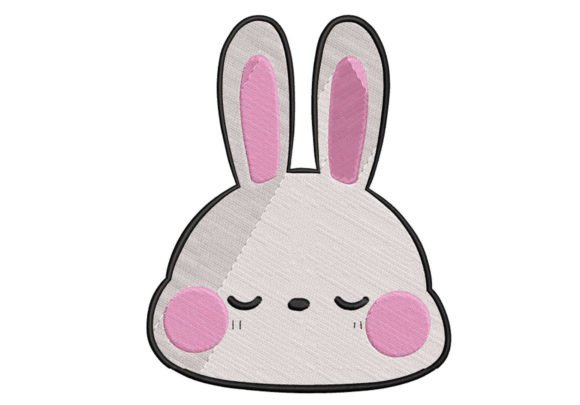
As an embroidery designer who’s digitized over 300 seasonal collections, I approached Whimsical Bunny with both curiosity and caution. The name alone sets a tone—soft, playful, gently nostalgic—but what matters most is how it translates to thread on fabric. Opening the file, I found a cohesive composition: a central bunny with rounded ears, delicate floral accents, and scattered Easter eggs rendered in layered satin and fill stitches. There’s no aggressive density or sharp vector edges—just intentional flow, balanced negative space, and subtle texture built into the stitch paths. It doesn’t scream “Easter” with cartoonish intensity; instead, it whispers delight. That’s rare—and valuable—for designers building a recognizable brand voice.
Fits Naturally Into Real Projects
Whimsical Bunny isn’t just decorative—it’s *functional*. I tested it across six product types: a linen kitchen towel, a cotton baby blanket, a midweight unstructured cap, a canvas tote bag, a brushed cotton sweatshirt, and a polyester pillow cover. On each, it held its personality without distortion. The bunny’s posture and scale (neither too wide nor overly vertical) make it ideal for center-chest placements on apparel, lower-corner positioning on towels, or centered layouts on nursery pillows. Its moderate width means it fits comfortably in common 4x4 and 5x7 hoops—no re-hooping required for standard applications. For Etsy sellers offering personalized gifts, that simplicity saves time and reduces customer revision requests.
Performance Across Fabric Types & Use Cases
On stable fabrics like quilting cotton or twill, Whimsical Bunny stitched cleanly with minimal stabilizer—just a light tear-away layer underneath. On stretchy sweatshirt fleece? I added a cutaway + topping combo, and the satin-stitched bunny ears retained their soft curve—no puckering or thread breakage. Dark fabrics demanded attention: I swapped default pastel thread colors for slightly richer tones (e.g., heathered mint instead of pale seafoam) to preserve legibility without losing whimsy. On curved cap surfaces, the design’s gentle arcs and lack of fine interior linework meant no skipped stitches or registration drift—a relief compared to busier Easter motifs.
For baby items and kitchen textiles—products that endure frequent washing—I checked stitch density carefully. Whimsical Bunny avoids ultra-dense fill areas, relying instead on strategic satin outlines and airy running-stitch vines. That translates to better durability and softer hand-feel, especially important for baby blankets and aprons. No dense “brick wall” zones that stiffen fabric or trap moisture. As a commercial embroidery designer, I appreciate that balance: charm without compromise.
What It Adds to Your Handmade Product
Using Whimsical Bunny elevates more than just the item—it lifts perception. Customers browsing Etsy or craft fairs respond to cohesive, confident design. This machine embroidery design reads as intentional, not generic. When paired with quality materials and thoughtful presentation (think natural-light photography on a wooden tray with sprigs of eucalyptus), it strengthens buyer trust. It also supports brand consistency: if your shop leans into gentle, nature-adjacent aesthetics, Whimsical Bunny slots right in—no stylistic whiplash.
It’s also gift-ready. Unlike abstract or text-heavy designs, this one communicates warmth and occasion instantly. A customer ordering a custom embroidered pillow cover for a new mom doesn’t need explanation—they see the bunny, the eggs, the softness, and feel the sentiment. That emotional resonance shortens decision time and increases perceived value—especially when priced alongside non-embroidered alternatives.
Practical Notes Before You Stitch
Before committing to a live order, always:
- Test Whimsical Bunny on scrap fabric matching your final substrate—especially for stretchy, napped, or dark textiles;
- Review thread color contrast: pastels pop on white but fade on navy; adjust accordingly;
- Check stitch density visually in your embroidery software—look for tight clusters that may cause buildup on lightweight fabrics;
- Confirm hoop size compatibility—don’t assume it fits your smallest hoop without measuring;
- Compare mockups on light vs. dark fabric to assess visual impact before listing;
- Use appropriate stabilizer: tear-away for stable wovens, cutaway + topping for knits or curves;
- Inspect small details post-stitch—especially the tips of bunny ears and egg highlights—to ensure clarity;
- Verify licensing terms on the Creative Fabrica product page before selling finished products, especially for digital embroidery file resale or large-batch commercial embroidery.
Where It Shines Most
Whimsical Bunny excels where handmade intention meets seasonal demand. It’s strong for:
- Tote bag design: Centered on natural canvas, it reads beautifully from a distance;
- Sweatshirt embroidery: Softens sporty silhouettes without overwhelming;
- Embroidered patch: Clean edges and balanced density make it ideal for iron-on or sew-on versions;
- Nursery decor: Gentle enough for baby blankets and pillow covers, yet distinctive for boutique displays;
- Printable mockup: Works well in lifestyle shots—pair it with neutral backdrops and organic textures;
- Commercial embroidery: Scalable across product lines without needing redesigns.
A Thoughtful Addition to Your Design Assets
Whimsical Bunny won’t replace every Easter-themed embroidery file you own—but it fills a specific, useful gap: joyful without being juvenile, detailed without being fussy, festive without feeling dated. For creative entrepreneurs building curated collections, it’s a reliable anchor design. For crafters launching seasonal listings or prepping for spring craft fairs, it’s a time-saver with aesthetic integrity. And for anyone stitching real orders—not just samples—it delivers consistent, camera-ready results. That’s not just convenience. It’s confidence, stitched in.