Cat Letter D: A Brand-First Embroidery Design Review
First Impression: Playful Charm Meets Professional Clarity
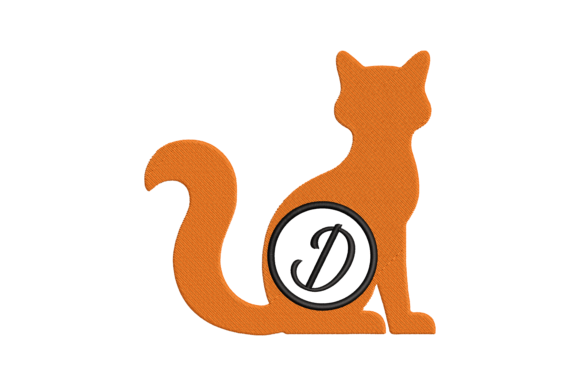
As an embroidery designer who’s developed hundreds of commercial designs for small businesses, my first glance at Cat Letter D tells me this isn’t just a decorative motif—it’s a branding opportunity in stitch form. The title alone signals personality: feline charm fused with letterform function. “Cat Letter D” suggests approachability and memorability—ideal for boutiques, pet brands, bakeries, florists, or creative studios where warmth and distinctiveness matter. Though categorized under Babies, its visual language transcends age brackets: it reads as friendly, handmade, and intentionally crafted—not childish or overly cutesy. That nuance is critical when building brand identity across apparel, patches, and product labels.
Real-World Business Performance: Where Cat Letter D Shines
In practice, Cat Letter D works exceptionally well as a compact branded accent. Think chest logos on staff aprons at a neighborhood café, sleeve details on boutique work shirts, or front-cap embroidery for a local florist’s team. Its letter-based structure gives it instant legibility—even at 2–2.5 inches tall—making it ideal for embroidered patches that’ll be sewn onto tote bags, denim jackets, or reusable packaging. For Etsy sellers and handmade brands, Cat Letter D adds a signature touch to custom apparel without overwhelming the garment. It scales gracefully from 1.75" patch size (perfect for lapel or pocket placement) up to 3.5" for tote bag center marks or apron corners.
Because it’s built around a single letter with integrated illustration, Cat Letter D supports visual consistency across multiple product types. Pair it with a simple monogram or minimalist tagline, and you’ve got a cohesive system—no need for full-word logos on every item. That’s invaluable for small business merch budgets. As a machine embroidery design, it also lends itself to printable mockups: clients instantly “see” how it’ll land on a cap or canvas bag before stitching begins.
Use With Intention: Critical Placement Considerations
That said, Cat Letter D demands thoughtful application. On curved surfaces like cap fronts or knit beanies, test stitch-out accuracy early—some cat motifs lose definition if outlines are too fine or stitch density too high. Avoid using it smaller than 1.5" unless you’ve verified clarity on your embroidery machine; tiny ears or whisker details may blur or skip on textured fabric like twill or heavy canvas. Dark uniforms require careful thread color selection: a light tan or cream thread might vanish, while neon or metallics could clash with brand tone. Always test on the actual fabric—especially for apron embroidery or staff uniforms that face frequent washing.
Also consider context: while charming, Cat Letter D may feel less aligned with ultra-minimalist or luxury-leaning brands. If your business voice is sleek and architectural, this design leans more toward warm, community-focused, or artisanal positioning. That’s not a limitation—it’s strategic clarity.
Brand Identity Impact: More Than Just Cuteness
Used intentionally, Cat Letter D strengthens customer trust through visual coherence and craftsmanship cues. A well-executed embroidered patch signals care and permanence—far more than a printed label. When customers see it stitched cleanly on a bakery’s linen apron or a pet brand’s canvas tote, they register professionalism *and* personality in one glance. That dual impression boosts perceived value and encourages repeat engagement. For crafters and digital embroidery file buyers, choosing Cat Letter D says: “We invest in quality assets that reflect our handmade product ethos.”
It also simplifies brand extension. Instead of designing new logos for every product line, small businesses can anchor their identity with Cat Letter D—then layer in seasonal colors, alternate thread palettes, or complementary icons. That flexibility saves time and maintains recognition across social media graphics, packaging accents, and event merch.
Practical Designer Notes Before You Stitch
- Always test in black and white first—this reveals contrast issues and helps assess outline integrity before committing to thread colors.
- Verify patch-size viability: stitch a 1.75" version on scrap fabric matching your final substrate. Check for stitch crowding, skipped stitches, or loss of feline detail.
- Review thread color contrast against both light and dark fabrics—especially for commercial embroidery where uniformity matters across dozens of garments.
- Inspect spacing between cat features and the letterform. Tight kerning can cause thread buildup; generous spacing improves wash durability.
- Confirm hoop size compatibility with your machine and intended application—e.g., cap frames often limit vertical height.
- Use appropriate stabilizer: lightweight cutaway for knits, medium tear-away for stable wovens, and fusible for delicate linens used in boutique merchandise.
- Create a physical mockup before client approval—digital previews don’t capture texture, sheen, or dimensional depth.
- Compare alongside other design assets: does Cat Letter D harmonize with your existing logo, fonts, and color palette?
- Confirm commercial licensing before production—especially for resale items, wholesale orders, or Etsy shop use. Not all digital embroidery files include blanket commercial rights.
Final Thought: A Strategic Asset, Not Just a Design
Cat Letter D succeeds because it balances whimsy with utility. It’s not merely an embroidery file—it’s a versatile, scalable element of your brand architecture. Whether you’re an embroidery shop sourcing reliable designs for clients, a handmade brand building recognizable merch, or a café owner stitching authenticity into every apron, this machine embroidery design delivers personality *and* precision. Just remember: its strength lies in intentional use. Respect fabric texture, honor stitch density limits, and always prioritize real-world wearability over digital prettiness. When those fundamentals align, Cat Letter D becomes more than a letter—it becomes your brand’s quiet, confident signature.