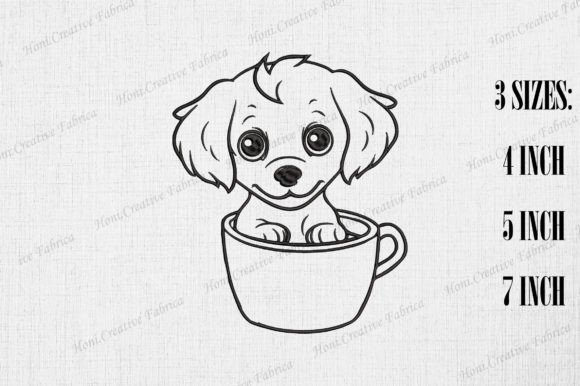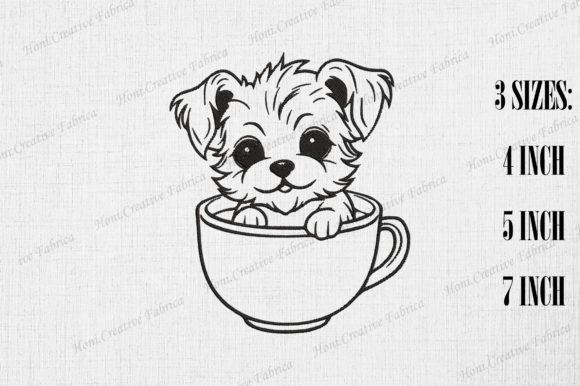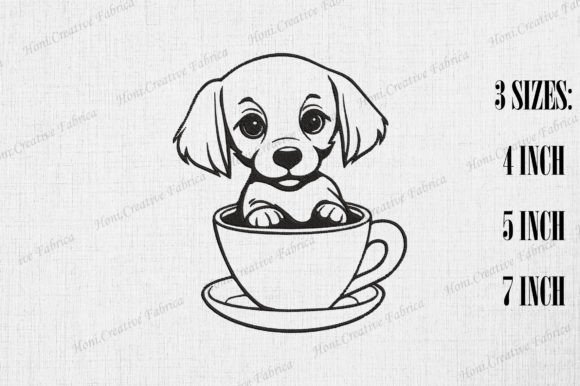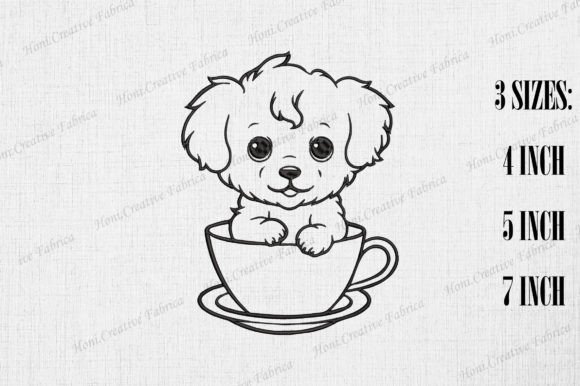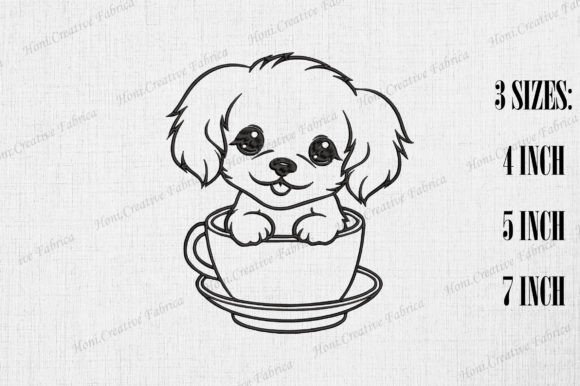
Cute Maltese Dog in Coffee Cup
First Impression: Sweet, Shareable, and Instantly Relatable
As an embroidery designer who’s prepped over 200 craft fair booths—and shipped thousands of digital embroidery files—I’ll say it straight: Cute Maltese Dog in Coffee Cup lands with quiet charm. It’s not loud or trendy; it’s warm, nostalgic, and emotionally resonant. Think “cozy coffee shop meets pet parent pride”—a soft-farmhouse-meets-modern-minimal vibe. No aggressive outlines, no cartoonish exaggeration—just a gentle silhouette of a fluffy Maltese nestled inside a ceramic mug. That subtle balance makes it feel premium, not mass-produced. For Etsy sellers and boutique makers, that’s gold: it reads as intentional, handmade, and story-driven—not just another dog design.
Where It Shines: Craft Fair Product Pairings That Sell
This machine embroidery design thrives where personality meets practicality. On a natural linen tea towel? Absolutely—it adds whimsy without overwhelming the fabric’s texture. As an apron embroidery centered just below the pocket? Perfect. The coffee cup anchors the composition, while the Maltese adds heart. On a cotton tote bag? Best at 3.5–4.5 inches wide—large enough to read from three feet away, small enough to keep the stitching crisp on curved seams.
It also works beautifully as an embroidered patch—ideal for attaching to denim jackets, market bags, or baby onesies (with proper safety testing). As a pillow cover focal point? Yes—but avoid ultra-plush fabrics where stitch definition blurs. And for caps? Only on structured front panels with light-to-medium weight cotton twill—curved surfaces demand clean line work, and this design delivers.
What Buyers Notice First (and Why It Converts)
At a crowded craft fair, attention spans are short. Cute Maltese Dog in Coffee Cup wins because it tells a micro-story in under two seconds: *“I love my dog. I love my morning coffee. I love things that feel soft and sincere.”* That emotional shorthand builds instant rapport. Customers linger longer, ask questions, and often buy multiples—especially when you display it across complementary items: a matching set of tea towel + pouch + embroidered cap.
It photographs exceptionally well for Etsy listings and Instagram posts—no harsh shadows needed. The contrast between the cup’s smooth curve and the dog’s fluffy texture gives depth even in flat lighting. And because it avoids tiny facial features or fine lettering, it scales cleanly from 2-inch patches to 6-inch pillow covers without losing legibility.
Production Realities: Smart Batch-Making Starts Here
This is a highly repeatable design for batch production—if you respect its limits. Stitch density is moderate (no dense satin fills or micro-stippling), so it runs reliably across most home embroidery machines. That means faster turnaround, fewer thread breaks, and consistent quality across 50+ tote bags or 30 tea towels. But don’t skip the prep: always test the embroidery file on scrap fabric matching your final product—especially for textured kitchen towels or dark denim. Thread colors matter deeply here: creamy ecru or soft taupe for the cup, cool gray or ivory for the Maltese, and a warm brown or charcoal for subtle shadow lines. Contrast = clarity.
Careful-Use Notes Every Designer Should Know
- Dense stitch areas: The cup handle and inner rim have tighter stitching—avoid doubling up on heavy stabilizer, or you’ll get stiffness and puckering on lightweight fabrics.
- Tiny details: The Maltese’s ear tufts and nose are delicate but not microscopic—still, skip this design on anything smaller than 2.25 inches wide.
- Dark fabric: Use bright, matte thread (not metallic) and consider a light underlay stitch to lift the design off deep navy or charcoal.
- Textured towels: Go with tear-away + light cut-away stabilizer combo—too much stability kills absorbency; too little loses definition.
- Curved cap surfaces: Hoop with medium-stick adhesive stabilizer and slow down machine speed by 20% for cleaner cup curves.
Design Integrity & Booth Impact
In your booth, Cute Maltese Dog in Coffee Cup isn’t just decoration—it’s a visual anchor. Group three items together (e.g., a folded tea towel, a mini pouch, and a sample patch on corkboard), and suddenly your table feels curated, not cluttered. It strengthens brand consistency for small shop owners who focus on pet-friendly, home-centered, or slow-living aesthetics. Plus, it invites engagement: customers point, smile, say “That’s my dog!”—and that moment often leads straight to checkout.
For digital sellers, this embroidery file is evergreen. Unlike seasonal motifs, coffee + dogs taps into daily rituals and enduring affections. Pair it with a printable mockup pack (tote, towel, cap views), and you’ve got a high-conversion Etsy listing that requires minimal updates.
Pro Designer Checklist Before You Cut Fabric
- Test the machine embroidery design on scrap fabric matching your final product’s weight and texture.
- Confirm thread contrast—especially if embroidering on black, navy, or heather gray.
- Review spacing: ensure the coffee cup’s base clears seam allowances on pouches and pillow covers.
- Verify hoop size compatibility—this design fits comfortably in a 4x4 hoop, but double-check before digitizing adjustments.
- Inspect stitch density visually—no overlapping fill areas that could cause thread nesting.
- Choose stabilizer wisely: cut-away for knits, tear-away for linens, adhesive-backed for caps.
- Create at least one real finished product mockup—not just digital—and photograph it in natural light.
- Compare how it looks on light vs. dark fabric swatches—you’ll spot clarity issues fast.
- Confirm commercial licensing terms before selling finished products—this is essential for Etsy sellers and wholesale partners.
Final Thought: A Quiet Seller With Big Heart
Cute Maltese Dog in Coffee Cup won’t shout—but it will be remembered. In a sea of bold fonts and flashy animals, its tenderness stands out. It’s the kind of handmade product people buy not just for function, but for feeling. Whether stitched on a market bag or offered as a digital embroidery file, it carries warmth, craftsmanship, and quiet confidence. For craft fair sellers, boutique makers, and creative entrepreneurs building something meaningful—one stitch at a time—this is more than a design. It’s a conversation starter, a gift with soul, and a reliable seller, season after season.