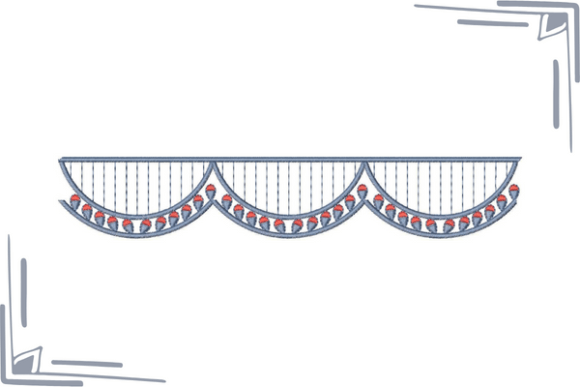
Dashing Cut Work Border
First Impressions: Delicate, Confident, and Unmistakably Handmade
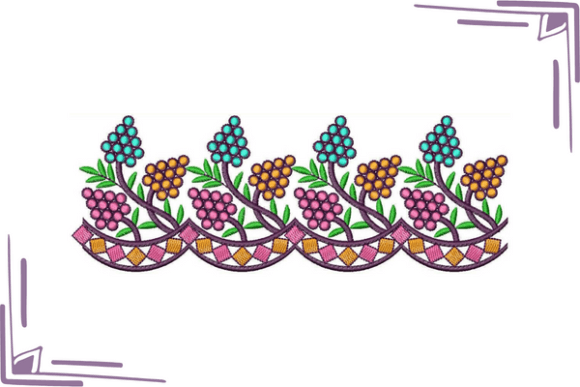
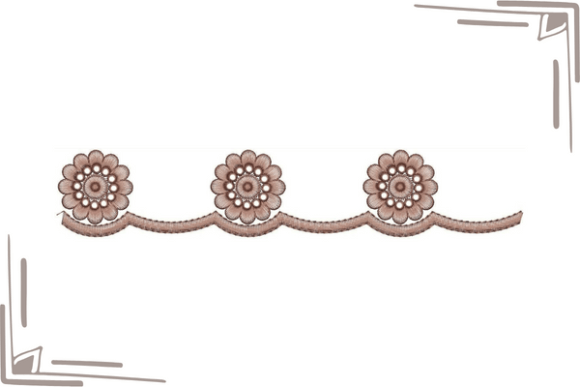
As an embroidery designer who’s stitched hundreds of boutique apparel collections—from linen tees to heavyweight French terry hoodies—I opened Dashing Cut Work Border expecting charm. What I found was something more: a design with quiet confidence. It reads as both refined and approachable—a rare balance in floral borders. The “cut work” reference immediately signals texture and dimension—not just surface stitching, but intentional negative space that invites light and shadow. Visually, it suggests fine stems, layered petals, and subtle scalloped or pierced edges, all rendered in clean, balanced proportions. This isn’t a dense filler; it’s a breathing, curated frame. On screen, the layout feels rhythmic—not rigidly symmetrical, but organically aligned, like vines trained along a trellis. That rhythm translates beautifully into motion: imagine it wrapping gently around a hoodie hem or tracing the curve of a crewneck sleeve.
How It Lives on Sweatshirts: From Neutral Basics to Seasonal Statements
Dashing Cut Work Border thrives where many floral designs falter—on real-world apparel. On heather grey or oatmeal sweatshirts, it reads as elevated minimalism: soft contrast, zero visual noise. On deep charcoal or navy fabric, rich thread colors (think burgundy, moss green, or antique gold) make the cut-work details pop without shouting. Pastel sweatshirts—dusty rose, seafoam, or buttercream—let the design shimmer with gentle femininity, especially when paired with tonal or near-tonal thread. For oversized hoodies? It shines at the cuff or waistband, adding intentionality to relaxed silhouettes. On cozy seasonal layers—cable-knit blends or brushed fleece—it softens the weight of the fabric, introducing airiness and craft. And yes—it works brilliantly as a back neckline accent or a subtle chest border on cropped or boxy fits. This is not a “one-placement-only” machine embroidery design. Its versatility makes it a smart investment for any small shop product line aiming for cohesion across styles.
Design Personality: Feminine, Decorative, and Quietly Bold
Let’s name it: Dashing Cut Work Border leans feminine—but never saccharine. It’s decorative without being fussy, detailed without feeling fragile. There’s a rustic elegance in its implied hand-cut precision, yet the execution (as a digital embroidery file) is crisp and production-ready. It’s neither aggressively modern nor nostalgically vintage—it occupies that sweet spot of timeless craft. For a boutique brand, that means instant visual recognition: customers begin to associate that delicate border with your attention to detail, your respect for textile tradition, and your commitment to handmade integrity. It doesn’t scream “look at me”—it whispers “feel this quality.” That subtlety builds trust, especially for Etsy sellers and handmade product shoppers who scan listings for authenticity cues.
Real-World Embroidery Considerations: Thread, Fabric & Durability
Before sending Dashing Cut Work Border to the hoop, consider three pillars: thread color, fabric texture, and stabilizer strategy. High-contrast thread (ivory on charcoal, navy on cream) maximizes legibility—critical for small-size readability on sleeve cuffs or pocket edging. But don’t overlook tonal pairings: soft sage on olive fleece adds depth, not distraction. Stitch density feels moderate—not so light it fades, not so heavy it stiffens the sweatshirt. That’s ideal for commercial apparel use: it moves with the fabric, survives repeated washing, and retains definition after tumble drying. For French terry or thick loopback, a medium-weight cutaway stabilizer prevents puckering while supporting those delicate cut-work zones. On lighter cotton blends, a tear-away + topping combo preserves surface clarity. Always test on your exact fabric—especially if using textured or brushed finishes. Remember: design assets behave differently across fiber content, dye lots, and garment construction.
Hoop Placement & Commercial Practicality
This border design scales gracefully. At 3.5" wide, it anchors a chest placement cleanly. At 6", it wraps a standard hoodie hem with elegant continuity. Because it’s modular—not a single rigid shape—it adapts to curved seams and varied garment grades. That flexibility saves time during digitizing prep and reduces hooping adjustments mid-production. For custom apparel shops running multiple client orders, that consistency matters. You’re not recalibrating tension or repositioning for every size—you’re building repeatable, confident output. Just verify the hoop size compatibility before bulk production. Also: confirm whether the embroidery file includes underlay optimization for knits—that’s often the difference between crisp results and slight distortion on stretchy sweatshirt ribbing.
Why It Elevates Your Brand—Beyond the Stitch
In a crowded digital marketplace, Dashing Cut Work Border does quiet branding work. It transforms a generic sweatshirt into a signature piece—not through logos, but through craft language. Customers notice the intention behind the border: the spacing, the flow, the way light catches the cut edges. That perception directly impacts perceived value. A $78 sweatshirt with this detail feels justified; a $48 one feels like a discovery. For creative entrepreneurs, that margin flexibility supports sustainable pricing. In lifestyle photography, it adds organic framing—think flat lays with dried florals, or model shots where the border echoes natural curves. On Etsy listings, it boosts engagement: buyers pause longer, zoom in, imagine wearing it. And because it’s adaptable across pillows, towels, and apparel (as noted in the original description), you can unify your entire design assets library—strengthening brand cohesion without repeating motifs.
A Final Note for Production Confidence
Dashing Cut Work Border delivers what the title promises: dash—and craft. It’s not merely “flower embroidery.” It’s structure, contrast, and thoughtful restraint. Before launching your limited drop, run a physical sample: stitch it on your target fabric, wash and dry it twice, then assess drape and detail retention. Review the embroidery file metadata for recommended thread counts, trim points, and jump stitch logic—these impact finish quality more than most designers admit. And always cross-check licensing terms if you’re producing for resale. While the description confirms broad fabric compatibility (“any fabric you like to work with”), commercial embroidery requires verification—not assumption. When executed well, Dashing Cut Work Border won’t just decorate your sweatshirts. It’ll define your standard.